Bootstrapping My Web Dev Agency in 2026: DIY Server vs. SaaS Showdown

The 2026 Web Dev Landscape: Opportunity and Overwhelm
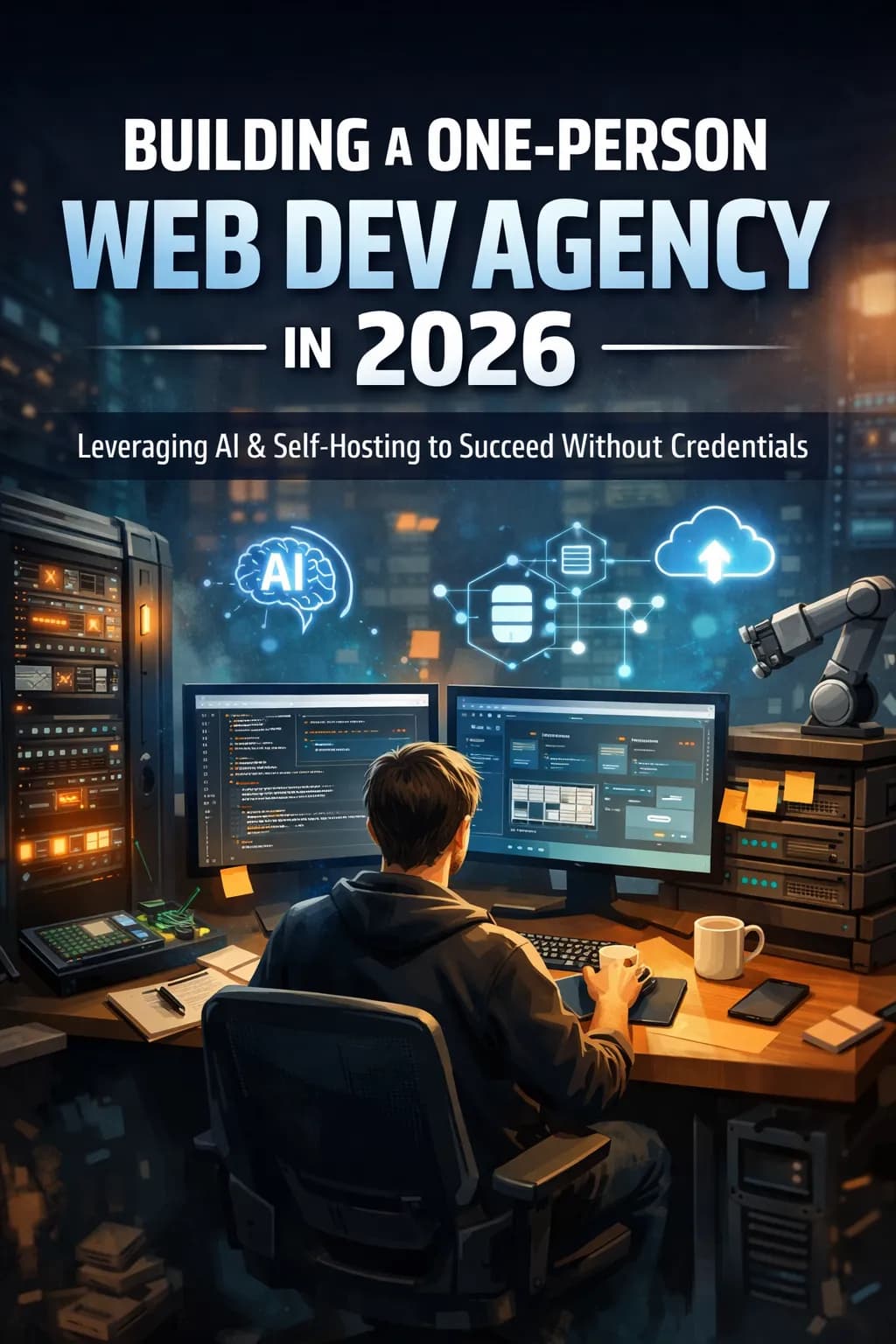
So, you need a website or web application. The options are endless, from drag-and-drop builders to sprawling enterprise solutions. As a one-person web dev agency in 2026, I'm navigating this landscape daily. But I'm not just slinging code; I'm building systems to deliver consistent results. This is the story of how I'm doing it, choosing my own path with self-hosting and AI as my allies. I'm building a web dev agency in 2026, and I'm betting on control.
The DIY Server: Control, Cost, and Customization
Why wrangle with servers in an age of 'serverless'? For me, it's about control. A dedicated server gives me granular control over performance, security, and scalability. Yes, it's more hands-on, but it unlocks powerful customization options and, in the long run, reduces costs compared to scaling SaaS platforms. Plus, understanding the full stack from server to browser gives me a strategic edge when troubleshooting and optimizing for clients. I chose a Debian-based system to start. Learning the ins and outs has been educational, and having that level of control is worth it to me. The best resources I've found are the official documentation and this wonderful ServerFault community [Link to ServerFault | https://serverfault.com].
AI as a Force Multiplier: Sanity and Scalability
AI isn't replacing developers; it's augmenting them. I use AI tools for everything from code generation and debugging to content creation and project management. This lets me focus on higher-level architecture, client communication, and strategic planning. For example, I rely heavily on Github Copilot [link to GitHub Copilot | https://github.com/features/copilot] to accelerate development and handle repetitive tasks. I've also been using ChatGPT for initial content drafts and brainstorming solutions to complex problems. By automating the mundane, I free up time for what truly matters: understanding client needs and delivering innovative solutions. The cost savings in the beginning were minimal but have grown exponentially as I learn the tool.
Deployment Mastery: From Code to Production
A beautiful website is useless if it's not deployed properly. I've invested heavily in automating my deployment process using tools like Docker and CI/CD pipelines. This ensures that changes are deployed quickly, reliably, and with minimal downtime. This also allows me to experiment and implement new features quickly. A robust deployment strategy is crucial for building trust with clients. They need to know their website is in capable hands. A good strategy is to use separate development, staging, and production servers. Here's a good starting point [Link to Digital Ocean Deployment Strategy | https://www.digitalocean.com/community/tutorials/how-to-set-up-a-ci-cd-pipeline-with-docker-compose-gitlab-and-gitlab-runner]
The 'Systems Builder' Advantage
My approach isn't just about writing code; it's about building systems. From infrastructure and deployment to project management and client communication, I'm creating a streamlined and efficient process that delivers consistent results. This is what differentiates me from 'just a coder'. I'm not just solving problems; I'm building a sustainable business. The goal is not to just 'make things work' but create a series of workflows that allow me to build on the shoulders of my past self and all of my past successes.
What's Next: Building on Momentum
The journey is just beginning. In the coming months, I'll be focusing on refining my AI workflows, expanding my service offerings, and building a stronger online presence. My goal is to become the go-to web dev agency for businesses that value quality, reliability, and innovation. Stay tuned for more updates on my progress!
Are you looking for a web development partner who understands the challenges and opportunities of 2026? Let's talk!